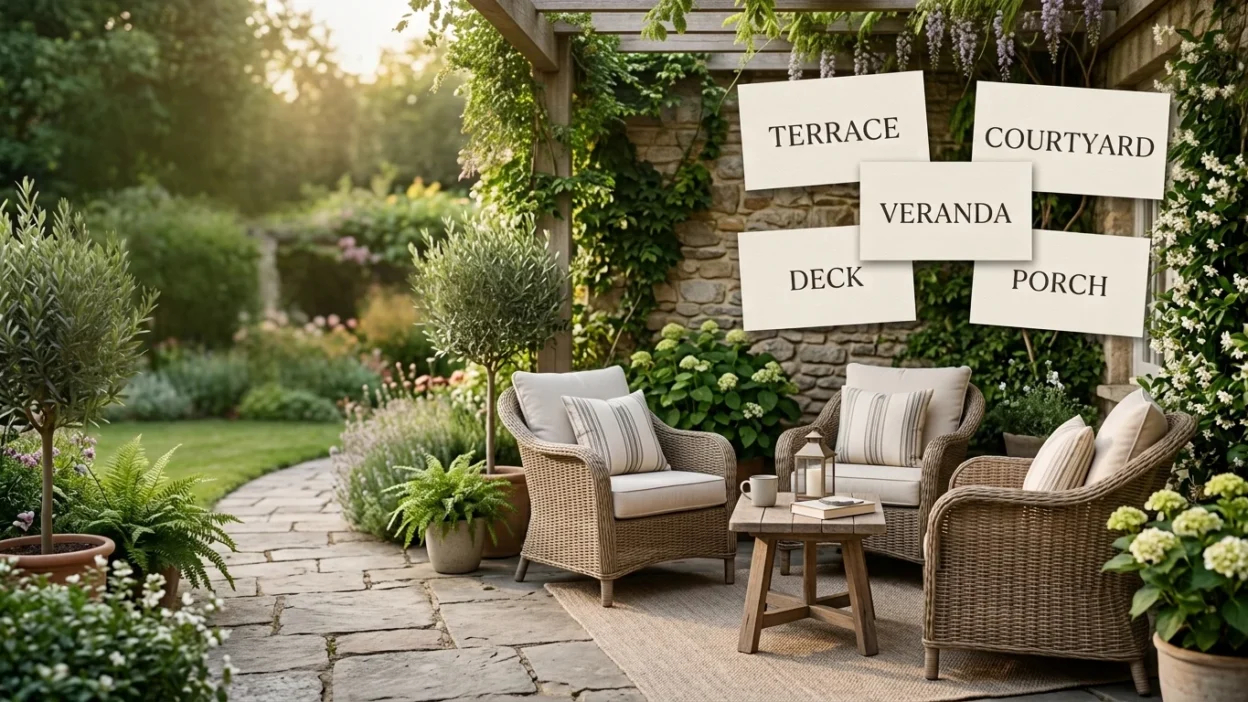
A patio is an outdoor area next to a house or building, usually designed for sitting, relaxing, dining, or entertaining. It may be made of concrete, stone, brick, tiles, or other materials and is often furnished with chairs, tables, plants, or outdoor decorations.
Learning synonyms for patio can help students, ESL learners, writers, and content creators describe outdoor spaces more clearly. However, not every alternative has exactly the same meaning. Words such as terrace, courtyard, deck, and veranda can describe similar spaces, but their design, location, and usage may differ.
What Does “Demure” Mean?
Demure describes someone who behaves in a quiet, modest, reserved, and somewhat shy way. It is often used to describe a person’s appearance, manner, expression, or behavior.
The word usually has a gentle, polite, and modest tone. For example, you might describe someone as demure if they speak softly, avoid drawing attention to themselves, or have a modest and reserved manner.
Example:
She gave a demure smile when everyone complimented her dress.
Usage context: Demure is common in descriptions of personality, behavior, clothing, facial expressions, and social manners.
30 Synonyms for Demure
Modest
Meaning: Not showing off or attracting too much attention.
Example: She chose a modest dress for the formal event.
Best usage: Clothing, behavior, and appearance.
Shy
Meaning: Nervous or uncomfortable around other people.
Example: The shy student rarely spoke during class.
Best usage: Personality and social behavior.
Reserved
Meaning: Quiet and not likely to share feelings openly.
Example: He was reserved when meeting new people.
Best usage: Personality and social situations.
Bashful
Meaning: Easily embarrassed, especially when receiving attention.
Example: She became bashful when her friends praised her.
Best usage: Friendly or gentle descriptions of shyness.
Timid
Meaning: Lacking confidence or courage in social situations.
Example: The timid child stood quietly beside her mother.
Best usage: Personality and behavior.
Unassuming
Meaning: Not trying to appear important or impressive.
Example: Despite his success, he remained unassuming.
Best usage: Personality and attitude.
Meek
Meaning: Very quiet, gentle, and unlikely to argue or resist.
Example: The meek student listened carefully to everyone.
Best usage: Gentle behavior; can sometimes suggest weakness.
Quiet
Meaning: Making little noise or not speaking much.
Example: She was quiet during the meeting.
Best usage: General behavior and communication.
Soft-spoken
Meaning: Speaking in a gentle or quiet voice.
Example: The soft-spoken teacher made everyone feel comfortable.
Best usage: Voice and communication style.
Gentle
Meaning: Kind, calm, and not harsh or aggressive.
Example: She had a gentle manner with young children.
Best usage: Personality and behavior.
Mild
Meaning: Calm and not strong, extreme, or aggressive.
Example: He has a mild and friendly personality.
Best usage: Personality, reactions, and temperament.
Subdued
Meaning: Quiet, restrained, or less noticeable than usual.
Example: She wore subdued colors to the ceremony.
Best usage: Appearance, emotions, colors, and behavior.
Restrained
Meaning: Controlled and not openly emotional or expressive.
Example: His response was restrained but respectful.
Best usage: Emotions, behavior, and reactions.
Retiring
Meaning: Avoiding attention and preferring to stay in the background.
Example: Her retiring nature made her uncomfortable at large parties.
Best usage: Personality and social behavior.
Unobtrusive
Meaning: Not attracting attention or causing disturbance.
Example: She preferred an unobtrusive style of clothing.
Best usage: Appearance, design, and behavior.
Unpretentious
Meaning: Simple and not designed to impress others.
Example: The restaurant has an unpretentious atmosphere.
Best usage: People, places, styles, and lifestyles.
Humble
Meaning: Not thinking that you are better or more important than others.
Example: She remained humble after winning the award.
Best usage: Character and attitude.
Coy
Meaning: Pretending to be shy or hesitant, often in a playful way.
Example: She gave a coy smile before answering.
Best usage: Playful or romantic situations.
Proper
Meaning: Behaving according to accepted social standards.
Example: She maintained a proper and respectful manner.
Best usage: Formal social behavior.
Well-mannered
Meaning: Polite and respectful in behavior.
Example: The well-mannered child thanked everyone for their help.
Best usage: Children, social behavior, and etiquette.
Polite
Meaning: Showing good manners and respect toward others.
Example: She was polite and considerate throughout the conversation.
Best usage: Everyday social situations.
Courteous
Meaning: Very polite and respectful toward others.
Example: The courteous guest thanked the host before leaving.
Best usage: Formal or respectful communication.
Refined
Meaning: Elegant, polished, and socially graceful.
Example: Her refined manner impressed the guests.
Best usage: Style, manners, and appearance.
Ladylike
Meaning: Traditionally considered graceful, polite, or appropriate for a woman.
Example: Her ladylike manner was noticeable at the formal dinner.
Best usage: Traditional descriptions of feminine behavior.
Demure
Meaning: Quiet, modest, reserved, and sometimes shy in manner.
Example: She gave a demure smile during the introduction.
Best usage: Appearance, behavior, expressions, and personality.
Discreet
Meaning: Careful not to attract attention or reveal private information.
Example: He made a discreet gesture toward the door.
Best usage: Actions, communication, and privacy.
Dignified
Meaning: Calm, serious, and worthy of respect.
Example: She remained dignified despite the criticism.
Best usage: Formal behavior and difficult situations.
Composed
Meaning: Calm and in control of your emotions.
Example: She stayed composed during the difficult interview.
Best usage: Emotional control and stressful situations.
Serene
Meaning: Very calm and peaceful.
Example: She had a serene expression on her face.
Best usage: Facial expressions, moods, and peaceful personalities.
Innocent
Meaning: Not showing experience with wrongdoing or inappropriate behavior.
Example: The child gave an innocent smile.
Best usage: Youthful appearance, intentions, and behavior.
Demure Synonyms Comparison Guide
| Synonym | Main Idea | Tone | Best Used For |
|---|---|---|---|
| Modest | Not attention-seeking | Positive | Appearance, clothing |
| Shy | Uncomfortable with attention | Neutral | Personality |
| Reserved | Emotionally private | Neutral | Personality |
| Bashful | Easily embarrassed | Gentle | Social situations |
| Timid | Lacking confidence | Neutral/negative | Behavior |
| Unassuming | Not seeking importance | Positive | Personality |
| Meek | Very gentle and passive | Neutral/negative | Behavior |
| Soft-spoken | Quiet voice | Positive | Speech |
| Coy | Playfully shy | Playful | Social/romantic contexts |
| Humble | Not boastful | Positive | Character |
| Courteous | Respectful and polite | Positive | Social behavior |
| Refined | Elegant and polished | Positive | Manners/style |
| Composed | Emotionally controlled | Positive | Difficult situations |
| Serene | Peaceful and calm | Positive | Mood/expression |
| Dignified | Calm and respectable | Formal | Behavior |
How to Choose the Right Synonym
Choosing the best synonym depends on what kind of demure behavior you want to describe.
For Shyness
Use shy, bashful, timid, or retiring when the person seems uncomfortable with attention or social interaction.
- Shy → general lack of confidence around people
- Bashful → embarrassed by attention
- Timid → lacking confidence or courage
- Retiring → prefers to stay away from attention
For Modest Appearance
Use modest, subdued, unassuming, or unobtrusive when describing clothing or appearance.
For example:
She wore a modest dress.
This focuses more on appearance than personality.
For Quiet Behavior
Use reserved, quiet, soft-spoken, or subdued.
These words work well when someone does not speak loudly, openly, or frequently.
For Good Manners
Use polite, courteous, well-mannered, proper, or refined.
These words focus on respectful or socially appropriate behavior rather than shyness.
For Calm Behavior
Use composed, serene, dignified, or gentle.
These are especially useful when describing someone who remains calm and controlled.
For Playful Shyness
Use coy when the person appears shy in a deliberate or playful way.
For example:
She gave him a coy smile.
Here, coy can suggest playful teasing rather than genuine nervousness.
Demure vs. Similar Words
Demure vs. Shy:
Shy focuses on nervousness or discomfort around people, while demure usually suggests modest and reserved behavior.
Demure vs. Modest:
Modest often describes clothing, appearance, or a person’s lack of pride. Demure more strongly describes a quiet, reserved manner.
Demure vs. Reserved:
Reserved suggests someone who does not openly express feelings. Demure adds an idea of modesty or gentle shyness.
Demure vs. Coy:
Coy can involve deliberate, playful shyness. Demure is generally calmer and more genuinely modest.
Demure vs. Timid:
Timid can imply weakness or a lack of courage. Demure is usually softer and more positive.
Why Context Matters When Using Synonyms
Synonyms are not always perfect replacements. Two words may have similar dictionary meanings but create different impressions.
For example, calling someone timid may suggest that they lack confidence. Calling the same person demure can sound more complimentary because it emphasizes modesty and reserved behavior.
Likewise, coy may suggest playful behavior, while reserved sounds more neutral and serious. Choosing the right word helps your writing communicate exactly what you mean.
FAQs:
What is the simplest synonym for demure?
Modest is one of the simplest and most useful synonyms for demure, especially when describing appearance or behavior.
Is shy a synonym for demure?
Yes, shy can be a synonym for demure in some contexts. However, shy focuses more on nervousness, while demure emphasizes modest and reserved behavior.
What is a positive synonym for demure?
Words such as modest, graceful, gentle, refined, humble, and unassuming can provide positive alternatives depending on the context.
What is the difference between demure and modest?
Demure usually describes a quiet, reserved manner, while modest can describe behavior, clothing, appearance, or a person’s attitude toward their achievements.
Is demure a formal word?
Yes. Demure is somewhat literary and formal compared with everyday words such as shy or quiet. It works particularly well in descriptive writing.
Can demure describe a man?
Yes. Although demure is sometimes associated with feminine appearance or behavior, it can describe anyone who behaves in a quiet, reserved, or modest way.
What is the opposite of demure?
Depending on context, possible opposites include bold, outgoing, confident, outspoken, flashy, and assertive.
Final Thoughts
The best synonym for demure depends on the exact meaning you want to communicate. Choose shy for nervousness, modest for a restrained appearance, reserved for emotional privacy, coy for playful shyness, and composed for calm self-control.
Understanding these subtle differences makes your vocabulary stronger and your writing more precise. If you are an ESL learner, student, writer, or content creator, using the right synonym can make a simple description much more natural and expressive.

Alexander Elijah is an administrator at knowsymbol.com, a platform focused on interpreting symbols. He supports site operations, content management, and helps develop educational resources for symbolic understanding and analysis.