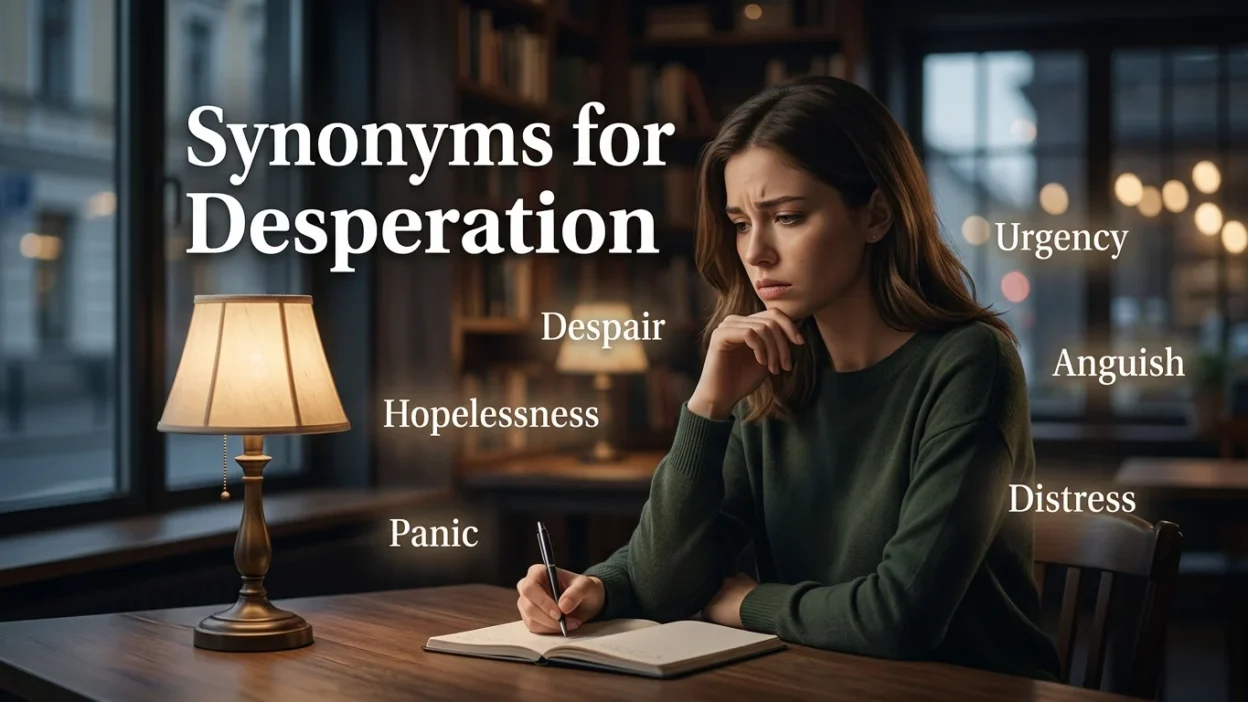
When you are writing an essay, story, email, or social media post, using the same word repeatedly can make your writing feel dull. Learning synonyms for desperation can help you express different shades of urgency, hopelessness, panic, and intense need more accurately.
The word desperation describes a strong feeling of hopelessness or extreme urgency, often experienced when someone believes they have very few options left. Depending on the situation, you may want a word that sounds emotional, dramatic, formal, or conversational.
This guide explores 30 useful alternatives to desperation in simple English. Each synonym includes an easy meaning, an example sentence, and the best context for using it. If you are an ESL learner, student, writer, or content creator, these words can help you choose the most precise expression.
What Does Desperation Mean?
Desperation is a state of extreme worry, hopelessness, or urgency that makes someone feel they must do something immediately.
The word can describe an emotional condition or a strong need for something. It often suggests that a person feels trapped, helpless, or out of choices.
Simple Definition of Desperation
Desperation: A feeling of extreme hopelessness or urgent need.
Tone and Usage
The word desperation is usually serious and emotional. It is commonly used in stories, news writing, personal situations, and discussions about difficult circumstances.
30 Synonyms for Desperation
Below are 30 words and phrases that can be used as synonyms or close alternatives to desperation. Some are direct synonyms, while others describe a specific aspect of desperate feelings, such as panic, urgency, or hopelessness.
1. Hopelessness
Meaning: The feeling that nothing will improve or that there is no solution.
Example:
Her hopelessness disappeared when she finally received good news.
Best usage context: Use this when focusing on a lack of hope rather than urgent action.
2. Despair
Meaning: A deep feeling of sadness and loss of hope.
Example:
He fell into despair after hearing the disappointing news.
Best usage context: Best for serious emotional situations involving little or no hope.
3. Despondency
Meaning: A strong feeling of sadness and discouragement.
Example:
After several failures, she struggled with despondency.
Best usage context: Useful in formal or literary writing.
4. Distress
Meaning: Extreme worry, sadness, or suffering.
Example:
The family was in great distress after the accident.
Best usage context: Use when desperation is connected to emotional pain or suffering.
5. Agony
Meaning: Extreme physical or emotional pain.
Example:
He waited in agony for news about his missing friend.
Best usage context: Best when the emotional experience is extremely painful.
6. Panic
Meaning: A sudden feeling of intense fear or anxiety.
Example:
She began to panic when she could not find her child.
Best usage context: Use when desperation causes sudden fear or uncontrolled reactions.
7. Frustration
Meaning: Annoyance or disappointment caused by being unable to achieve something.
Example:
His frustration increased after every failed attempt.
Best usage context: Appropriate when someone is struggling because their efforts are not working.
8. Urgency
Meaning: The need to act quickly or immediately.
Example:
The emergency required immediate action and a strong sense of urgency.
Best usage context: Use when the main idea is immediate action rather than emotional hopelessness.
9. Need
Meaning: A strong requirement or desire for something essential.
Example:
Her need for financial support became increasingly serious.
Best usage context: Useful when desperation comes from lacking something important.
10. Helplessness
Meaning: The feeling that you cannot control or change a situation.
Example:
He experienced a deep sense of helplessness as the situation became worse.
Best usage context: Best when someone feels unable to solve a problem.
11. Powerlessness
Meaning: The feeling of having no control or influence.
Example:
The community felt powerless during the crisis.
Best usage context: Useful for social, political, personal, or difficult circumstances.
12. Anxiety
Meaning: Strong worry or nervousness about something.
Example:
Her anxiety grew as the deadline approached.
Best usage context: Use when desperation is linked to fear, worry, or uncertainty.
13. Fear
Meaning: An unpleasant emotion caused by danger or the possibility of harm.
Example:
Fear drove him to search for help immediately.
Best usage context: Appropriate when desperation is motivated by danger or threat.
14. Distressfulness
Meaning: The quality of causing or involving serious emotional suffering.
Example:
The distressfulness of the situation was difficult for everyone to handle.
Best usage context: More formal and less common; useful when describing the nature of a troubling situation.
15. Anguish
Meaning: Severe emotional or mental pain.
Example:
She cried out in anguish after learning the truth.
Best usage context: Excellent for powerful emotional or literary writing.
16. Misery
Meaning: Great unhappiness or suffering.
Example:
He lived in misery after losing everything he owned.
Best usage context: Use when desperation involves prolonged unhappiness or suffering.
17. Suffering
Meaning: The experience of physical or emotional pain.
Example:
The victims endured years of suffering before receiving help.
Best usage context: Best for situations involving ongoing pain or hardship.
18. Desperateness
Meaning: The condition of being desperate or extremely urgent.
Example:
The desperateness of their situation forced them to make a difficult choice.
Best usage context: Useful when directly describing the seriousness of a desperate situation.
19. Craving
Meaning: A very strong desire for something.
Example:
He had a desperate craving for freedom.
Best usage context: Use when desperation involves an intense desire or longing.
20. Longing
Meaning: A strong and lasting desire for someone or something.
Example:
She felt a deep longing to return to her hometown.
Best usage context: Best for emotional desire, especially in personal or literary writing.
21. Yearning
Meaning: A powerful emotional desire for something that is difficult to have.
Example:
He felt a deep yearning for a better life.
Best usage context: Suitable for emotional, poetic, and reflective writing.
22. Impatience
Meaning: A lack of willingness to wait.
Example:
Her impatience grew as she waited for the final decision.
Best usage context: Use when desperation is connected to an inability to wait.
23. Agitation
Meaning: A state of nervousness, worry, or emotional disturbance.
Example:
His agitation was obvious as he waited for the results.
Best usage context: Useful when desperation creates visible restlessness or nervous behavior.
24. Restlessness
Meaning: The inability to relax or remain calm.
Example:
The uncertainty caused a growing sense of restlessness.
Best usage context: Best when someone is anxious and unable to stay calm.
25. Frenzy
Meaning: A state of wild excitement, panic, or uncontrolled activity.
Example:
The announcement sent the crowd into a frenzy.
Best usage context: Use when desperation leads to intense, chaotic, or uncontrolled behavior.
26. Alarm
Meaning: Sudden fear or worry caused by a perceived danger.
Example:
The sudden noise caused alarm among the residents.
Best usage context: Appropriate when a desperate reaction is caused by unexpected danger.
27. Desolation
Meaning: A deep feeling of loneliness, sadness, or emptiness.
Example:
After everyone left, he was overwhelmed by a sense of desolation.
Best usage context: Best for emotional and literary descriptions of profound loneliness.
28. Gloom
Meaning: A feeling or atmosphere of sadness and lack of hope.
Example:
The long period of uncertainty created a mood of gloom.
Best usage context: Useful when describing a dark or hopeless emotional atmosphere.
29. Dire need
Meaning: An extremely urgent and serious need.
Example:
The organization provided food to families in dire need.
Best usage context: Excellent for formal, humanitarian, and serious situations.
30. Extreme urgency
Meaning: A situation that requires immediate attention or action.
Example:
The message was sent with extreme urgency because time was running out.
Best usage context: Best for professional, formal, and practical writing.
Quick Comparison of Synonyms for Desperation
| Synonym | Main Meaning | Tone | Best Use |
|---|---|---|---|
| Hopelessness | Lack of hope | Serious | Emotional situations |
| Despair | Deep loss of hope | Strong | Personal and literary writing |
| Distress | Extreme worry or suffering | Serious | Difficult situations |
| Panic | Sudden intense fear | Strong | Emergency situations |
| Urgency | Need for immediate action | Neutral | Professional writing |
| Helplessness | Inability to help yourself | Emotional | Personal struggles |
| Powerlessness | Lack of control | Serious | Social and personal issues |
| Anxiety | Strong worry | Common | Everyday and formal writing |
| Anguish | Severe emotional pain | Very strong | Literary and emotional writing |
| Misery | Great unhappiness | Strong | Long-term suffering |
| Craving | Intense desire | Emotional | Wants and desires |
| Longing | Strong desire | Gentle | Personal writing |
| Yearning | Deep emotional desire | Poetic | Creative writing |
| Frenzy | Uncontrolled excitement or panic | Dramatic | Chaotic situations |
| Dire need | Extremely serious need | Formal | Humanitarian contexts |
How to Choose the Right Synonym for Desperation
Choosing the best synonym depends on what you want to communicate. Not every alternative has exactly the same meaning as desperation.
For a Lack of Hope
Choose:
- Hopelessness
- Despair
- Despondency
- Gloom
- Desolation
These words work well when someone believes their situation cannot improve.
Example:
For Fear and Sudden Panic
Choose:
- Panic
- Fear
- Alarm
- Agitation
- Frenzy
These words are better when desperation causes an immediate emotional reaction.
For Emotional Pain
Choose:
- Anguish
- Agony
- Misery
- Distress
- Suffering
These alternatives emphasize emotional or physical pain.
For an Urgent Situation
Choose:
- Urgency
- Dire need
- Extreme urgency
- Need
- Impatience
These terms work well when the main focus is on the need to act quickly.
For Feeling Unable to Act
Choose:
- Helplessness
- Powerlessness
- Despondency
- Hopelessness
These words are appropriate when someone feels trapped or unable to change the situation.
For Strong Desire
Choose:
- Craving
- Longing
- Yearning
- Need
These words work when desperation means wanting something very strongly.
Desperation Synonyms for Different Writing Styles
For Academic Writing
Consider using:
- Urgency
- Distress
- Powerlessness
- Dire need
- Extreme urgency
These words are generally more suitable for formal discussions.
For Creative Writing
Consider using:
- Despair
- Anguish
- Yearning
- Desolation
- Agony
These words can create stronger emotional images.
For Everyday English
Consider using:
- Panic
- Anxiety
- Need
- Frustration
- Fear
These are easy for most readers to understand.
For Professional Writing
Consider using:
- Urgency
- Dire need
- Distress
- Extreme urgency
- Immediate need
These options often sound clearer and more appropriate in workplace or organizational communication.
Synonyms for Desperation in a Sentence
Here are a few examples showing how different alternatives can change the meaning:
These examples show that each word highlights a slightly different aspect of the situation.
Final Thoughts
Understanding synonyms for desperation can make your vocabulary more flexible and your writing more precise. While words such as despair, hopelessness, and despondency focus on a lack of hope, terms like panic, anxiety, and alarm emphasize fear and emotional reaction.
If you are describing urgent action, urgency, dire need, or extreme urgency may be better choices. For strong emotional pain, anguish, agony, and misery can express deeper feelings. The key is to choose the word that best matches the exact situation and tone.
By learning these distinctions, students, ESL learners, writers, and content creators can avoid repetition and communicate emotions with greater accuracy and impact.