
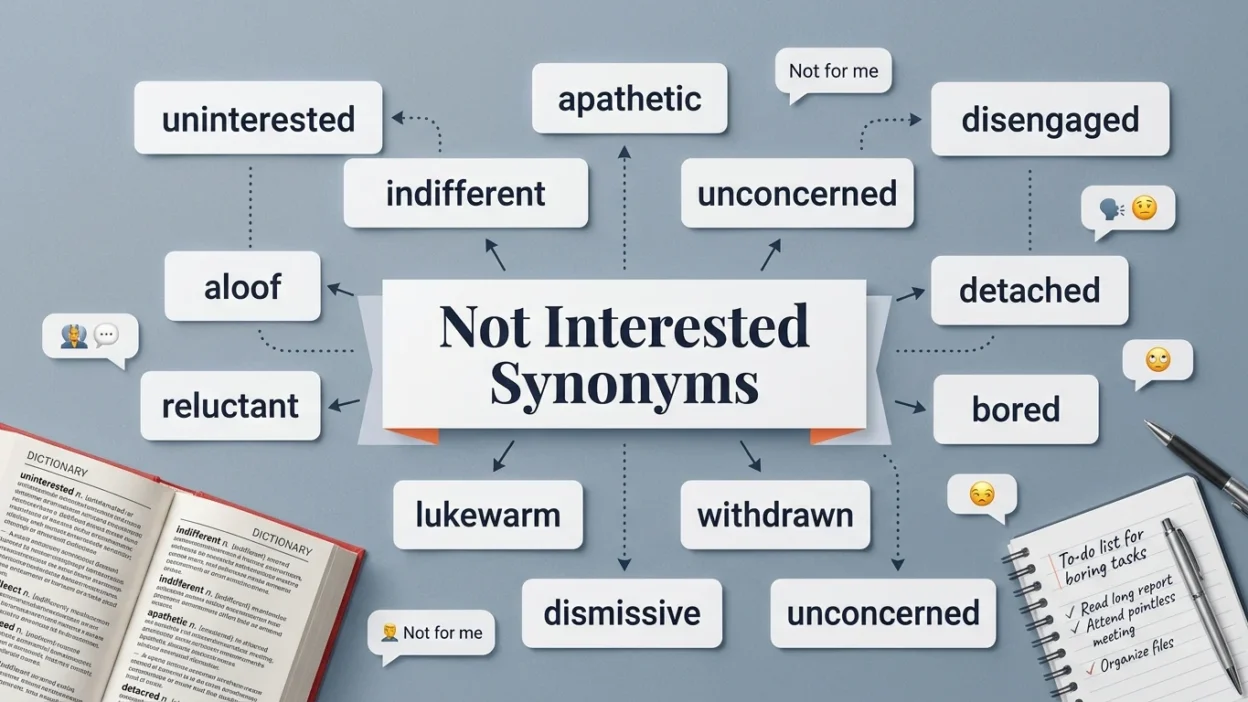
Sometimes saying “not interested” feels too direct, repetitive, or even impolite. Whether you’re writing an email, having a conversation, creating content, or improving your English vocabulary, learning not interested synonyms helps you communicate more naturally and accurately.
This guide explores the best alternatives to not interested, explains their meanings in simple English, and shows when each word works best. If you’re a student, ESL learner, writer, or professional, these synonyms will help you choose the perfect expression for every situation.
What Does “Not Interested” Mean?
Not interested means having little or no desire, curiosity, excitement, or willingness to pay attention to something.
It can describe:
- A person who doesn’t care about a topic
- Someone who refuses an offer politely
- A lack of excitement
- Emotional detachment
- No motivation to participate
Examples
- I’m not interested in watching horror movies.
- She wasn’t interested in the job offer.
- They seemed not interested during the lecture.
Meaning of “Demure” (Simple English)
Although this article focuses on not interested synonyms, many learners also search for the word demure.
Demure means:
It usually describes someone who behaves politely without seeking attention.
Tone
- Positive
- Gentle
- Respectful
- Traditional
Example
Unlike not interested, demure describes personality or behavior rather than a person’s level of interest.
30 Not Interested Synonyms
1. Uninterested
Meaning: Not wanting to know or take part.
Example: He looked uninterested during the meeting.
Best Use: General conversations.
2. Indifferent
Meaning: Having no strong feelings.
Example: She seemed indifferent to the results.
Best Use: Formal writing.
3. Apathetic
Meaning: Showing little emotion or concern.
Example: The audience became apathetic.
Best Use: Emotional situations.
4. Detached
Meaning: Emotionally separate.
Example: He remained detached from the discussion.
Best Use: Professional writing.
5. Disengaged
Meaning: Not involved or paying attention.
Example: Students became disengaged.
Best Use: Education and workplaces.
6. Bored
Meaning: Feeling tired because something isn’t interesting.
Example: I’m bored with this movie.
Best Use: Everyday speech.
7. Unenthusiastic
Meaning: Showing little excitement.
Example: She gave an unenthusiastic reply.
Best Use: Formal conversations.
8. Reluctant
Meaning: Not willing to do something.
Example: He was reluctant to join.
Best Use: Decisions.
9. Hesitant
Meaning: Unsure or unwilling.
Example: She seemed hesitant.
Best Use: Social situations.
10. Cold
Meaning: Showing little warmth or interest.
Example: His response was cold.
Best Use: Describing behavior.
11. Passive
Meaning: Not actively involved.
Example: He stayed passive.
Best Use: Group activities.
12. Reserved
Meaning: Quiet and not expressive.
Example: She remained reserved.
Best Use: Personality descriptions.
13. Aloof
Meaning: Distant and uninvolved.
Example: He appeared aloof.
Best Use: Character descriptions.
14. Withdrawn
Meaning: Keeping away from others.
Example: She became withdrawn.
Best Use: Emotional writing.
15. Distracted
Meaning: Paying attention elsewhere.
Example: He looked distracted.
Best Use: Daily conversations.
16. Inattentive
Meaning: Not paying attention.
Example: The student was inattentive.
Best Use: School or work.
17. Unresponsive
Meaning: Not reacting.
Example: He remained unresponsive.
Best Use: Formal situations.
18. Dispassionate
Meaning: Without emotion.
Example: She gave a dispassionate opinion.
Best Use: Academic writing.
19. Lukewarm
Meaning: Showing only slight interest.
Example: They gave a lukewarm response.
Best Use: Reviews.
20. Neutral
Meaning: Not taking sides.
Example: He stayed neutral.
Best Use: Opinions.
21. Unconcerned
Meaning: Not worried or interested.
Example: She appeared unconcerned.
Best Use: Emotional descriptions.
22. Careless
Meaning: Showing little care.
Example: His careless attitude disappointed everyone.
Best Use: Behavior.
23. Dismissive
Meaning: Showing something isn’t important.
Example: She was dismissive of the idea.
Best Use: Opinions.
24. Unmoved
Meaning: Not emotionally affected.
Example: He remained unmoved.
Best Use: Emotional situations.
25. Cool
Meaning: Calm and emotionally distant.
Example: She gave a cool reply.
Best Use: Informal writing.
26. Disinclined
Meaning: Not willing.
Example: I’m disinclined to participate.
Best Use: Formal English.
27. Resistant
Meaning: Opposed to something.
Example: He was resistant to change.
Best Use: Workplace discussions.
28. Unexcited
Meaning: Not feeling excitement.
Example: She seemed unexcited.
Best Use: Everyday conversations.
29. Weary
Meaning: Tired of something.
Example: I’m weary of arguing.
Best Use: Emotional contexts.
30. Fed Up
Meaning: Completely tired or annoyed.
Example: I’m fed up with the delays.
Best Use: Informal speech.
Comparison Guide: When to Use Different Not Interested Synonyms
| Synonym | Meaning | Best Situation | Tone |
|---|---|---|---|
| Uninterested | No interest | Everyday English | Neutral |
| Indifferent | No strong feelings | Formal writing | Neutral |
| Apathetic | No concern | Psychology | Serious |
| Detached | Emotionally distant | Professional | Formal |
| Disengaged | Not involved | Education | Neutral |
| Bored | Lacking entertainment | Casual speech | Informal |
| Reluctant | Not willing | Decisions | Neutral |
| Aloof | Distant personality | Character writing | Formal |
| Lukewarm | Weak interest | Reviews | Neutral |
| Fed Up | Extremely tired | Informal conversations | Informal |
How to Choose the Right Synonym
Choosing the best not interested synonym depends on your situation and tone.
For Everyday Conversation
Use:
- Uninterested
- Bored
- Unexcited
- Reluctant
- Distracted
Example:
For Professional Writing
Choose:
- Indifferent
- Detached
- Disengaged
- Disinclined
- Unresponsive
Example:
For Emotional Situations
Better options include:
- Apathetic
- Withdrawn
- Unmoved
- Unconcerned
- Aloof
For Formal Essays
Good choices:
- Dispassionate
- Indifferent
- Detached
- Reserved
- Neutral
For Casual Conversations
Natural alternatives include:
- Bored
- Fed up
- Unexcited
- Cool
- Distracted
Common Mistakes to Avoid
Avoid using every synonym in every situation.
For example:
❌ I’m apathetic about pizza.
✔ I’m not interested in pizza.
Likewise,
❌ She was bored with the funeral.
✔ She remained quiet and reserved.
Always match the word to the context and tone.
Tips for ESL Learners
- Learn the meaning before memorizing the word.
- Read example sentences aloud.
- Practice using one new synonym every day.
- Pay attention to whether the word is formal or informal.
- Choose words that fit the situation naturally.
FAQs:
What is the best synonym for not interested?
Uninterested is the closest and most commonly used synonym.
Is indifferent the same as not interested?
Almost. Indifferent means having no strong opinion or feeling, while not interested simply means lacking interest.
Which synonym is most formal?
Dispassionate, Detached, and Disinclined are formal alternatives.
What is an informal synonym?
Bored, Fed up, and Unexcited work well in casual conversations.
Can bored and not interested mean the same thing?
Sometimes. Bored suggests you’ve lost interest because something isn’t enjoyable.
Which synonym works best in business writing?
Disengaged, Indifferent, and Detached are excellent choices.
Conclusion
Learning not interested synonyms helps you communicate more clearly and naturally in both speaking and writing. While uninterested is the closest replacement, words like indifferent, disengaged, reluctant, aloof, and fed up each express different shades of meaning.
The key is choosing the synonym that best matches your tone, audience, and context. Expanding your vocabulary not only improves your English but also makes your writing more engaging, professional, and precise.

Alexander Elijah is an administrator at knowsymbol.com, a platform focused on interpreting symbols. He supports site operations, content management, and helps develop educational resources for symbolic understanding and analysis.